ifm · Machine safety

ifm Machine Safety Sensors & Protection

Build machine-safety functions around fail-safe inductive sensing, guard monitoring, electro-sensitive protection and safe field I/O. Product capability must always be integrated into a complete risk-reduced and validated safety architecture.

Fail-safe inductiveSafety light curtainsSafety door switchesAS-i SafetySafety over IO-Link
ifm GG712S fail-safe inductive safety sensor
Inductive safetyNo special targetDirect metal detection
Optical protectionType 4 routesLight curtains and grids
Guard monitoringRFID / magneticNon-contact door sensing
Safe field I/ODistributed optionsAS-i and Safety over IO-Link
Safety technology routes

Protective technology selection by safety function

Do not choose by housing alone. Start with what must be detected, how personnel access the hazard, and how the signal will be evaluated.

ifm Fail-safe inductive sensors
INDUCTIVE

Fail-safe inductive sensors

Directly detect suitable metal targets without a dedicated coded or magnetic actuator.

  • Wear-free non-contact principle
  • Connect to approved safety logic / safe I/O
  • Current full-metal variants support harsh environments
View official ifm information →
ifm RFID & magnetic safety switches
GUARD

RFID & magnetic safety switches

Monitor machine guards, doors and gates with non-contact coded sensing.

  • RFID route for highest coding / tamper protection
  • Magnetic route for flexible actuation
  • Series architectures available by family
View official ifm information →
ifm Safety light curtains & grids
ESPE

Safety light curtains & grids

Protect access points and open hazardous areas without a physical guard.

  • Light curtains for finger/hand/body protection
  • Light grids for body/access protection
  • Current Type 4 routes available
View official ifm information →
Typical applications

Different hazards require different sensing concepts

01
Metal position

Safe machine position detection

Use fail-safe inductive sensing where a suitable metal component itself can be detected.

02
Guard access

Door and gate monitoring

Use RFID or magnetically coded switches when opening a guard must interrupt hazardous motion.

03
Open access

Light curtain / light grid protection

Use electro-sensitive protection where operators need frequent access without opening a physical guard.

04
Distributed machines

Safe field I/O

Use AS-i Safety or Safety over IO-Link where the approved architecture benefits from distributed wiring.

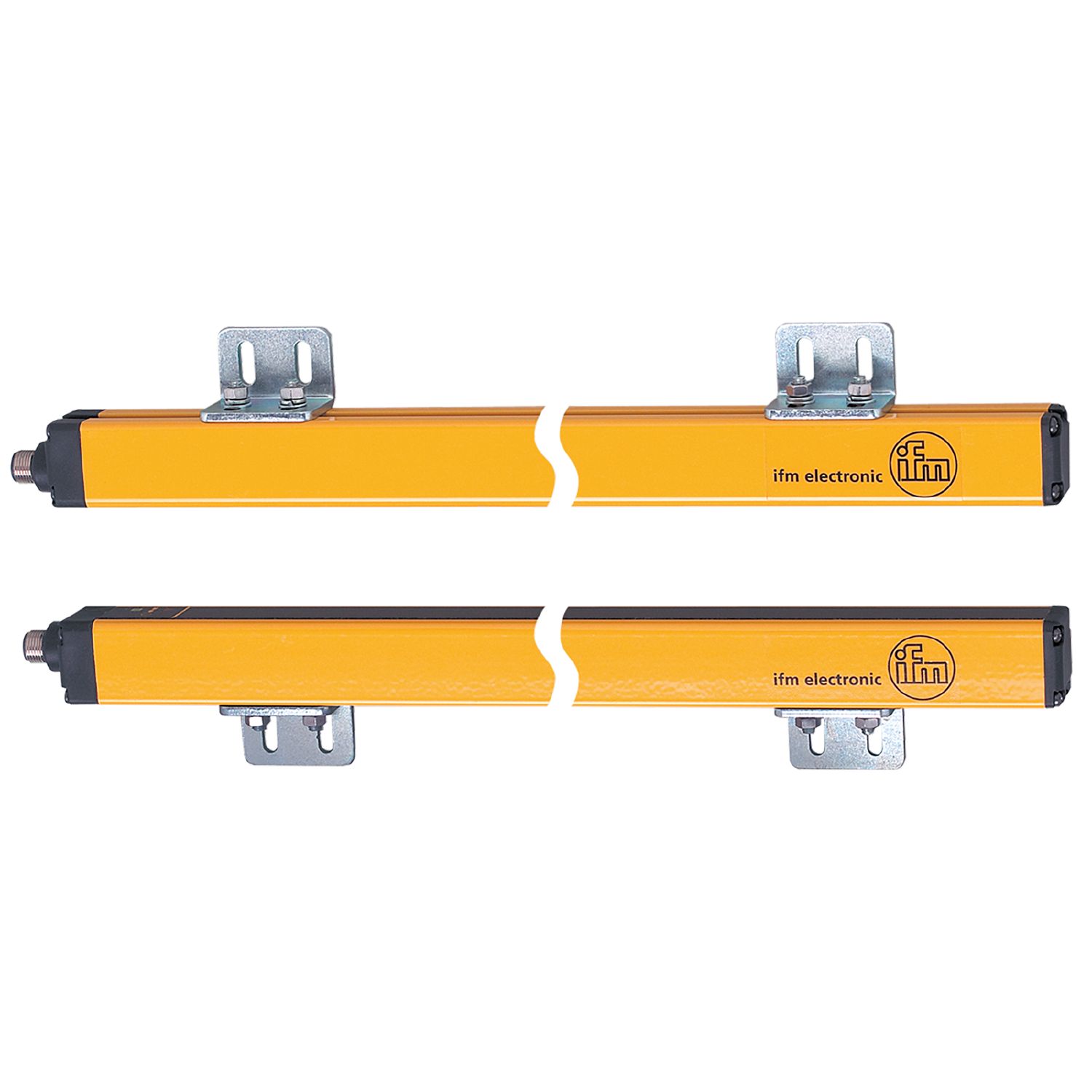
ifm safety light curtain for machine protection
Complete safety function

The sensor is only one subsystem in the machine-safety chain

A safe sensor does not by itself establish a machine-level PL or SIL. The complete safety function must include the protective device, safety logic, safe outputs, stopping behaviour, reset/restart logic and validation.

InputSensor / switch / ESPE
LogicSafety PLC / relay / safe I/O
OutputContactor / drive safety
MachineSafe state + restart control
Risk assessment firstRequired safety performance comes from the machine risk and safety-function design.
OSSD / interfaceMatch sensor output architecture to approved safety logic.
Stopping timeEspecially critical for light-curtain positioning and open-access protection.
ValidationVerify faults, reset, restart and final machine behaviour.
Selection guide

Hazard and access method as the starting point

Requirementifm routeWhy it fitsKey check
Safe position of a metal componentFail-safe inductiveNo special actuator requiredSafe sensing zone, target geometry, logic interface
Physical guard / doorMN RFID or magneticNon-contact guard-state detectionCoding level, series architecture, manipulation risk
Open intervention pointSafety light curtainFinger/hand/body protection without a gateResolution, range, protective height, stopping distance
Access opening / perimeterSafety light gridBody/access detection over wider spansBeam spacing, range, muting if required
Distributed safe signalsAS-i Safety / Safety over IO-LinkReduce field wiring in suitable architecturesController, network, safety level, approved modules
Engineering criteria

Machine-safety hardware selection beyond the product list

Minimum application data

Safety selection requires more than a part number. Primionics should understand the hazardous movement, access, required response and existing safety logic before proposing a route.

HazardType of hazardous motion / energy and access
Safety functionGuard monitoring, presence detection, position, E-STOP interface, etc.
Required performanceTarget PL / SIL from machine safety design
Stopping behaviourRun-down / stop time / safe distance
ArchitectureRelay, safety PLC, AS-i Safety, Safety over IO-Link
EnvironmentWashdown, outdoor, shock/vibration, contamination
Requirement capture

To send for an ifm safety review

MachineMachine type, model and process.
HazardWhat movement or energy must be made safe.
AccessDoor, opening, service lid, perimeter or exposed process.
Existing safetyCurrent relay / safety PLC / field I/O and wiring.
Performance targetRequired PL/SIL or safety-function documentation if available.
Drawings / photosElectrical diagram, guard photos, distances and existing part numbers.