Industrial Card
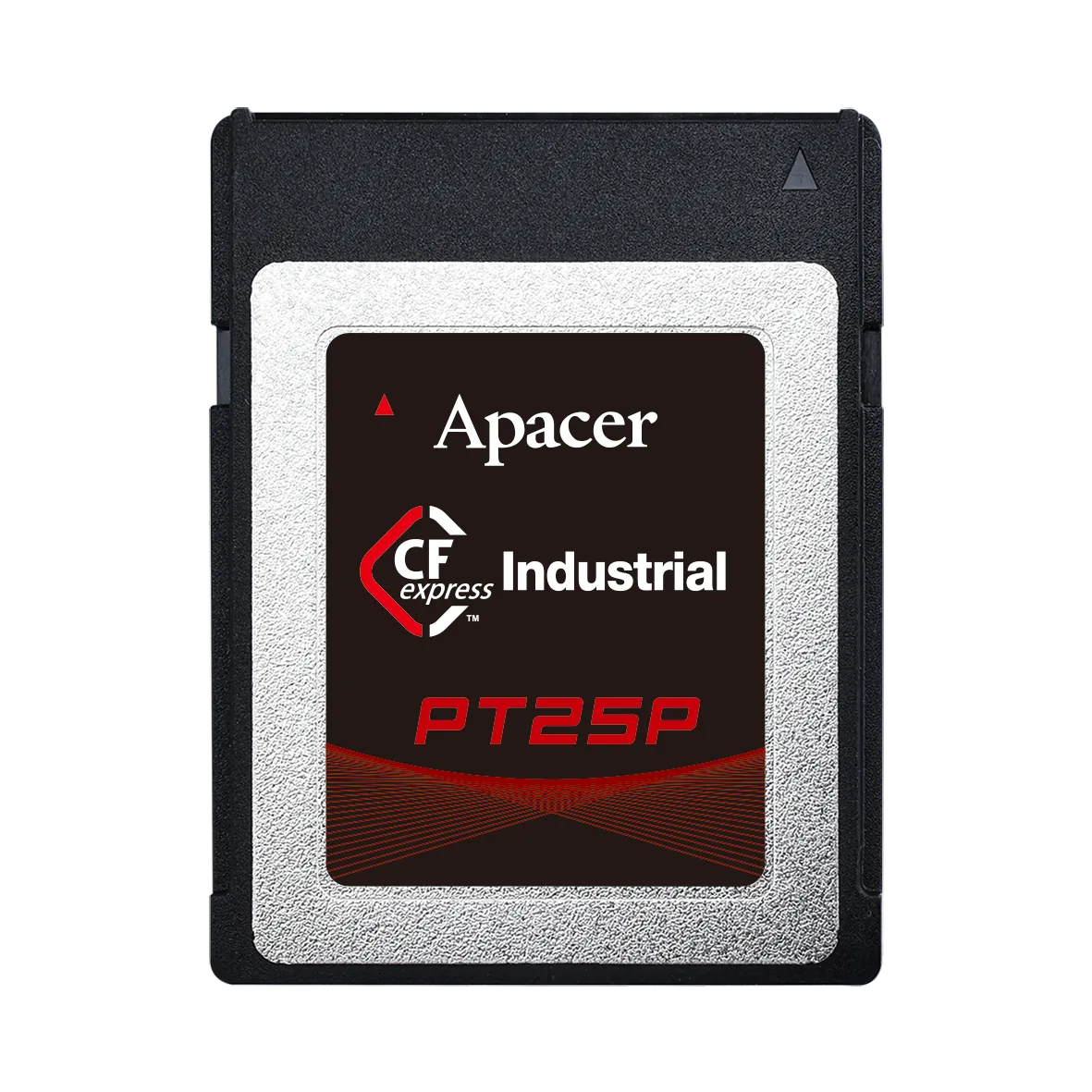
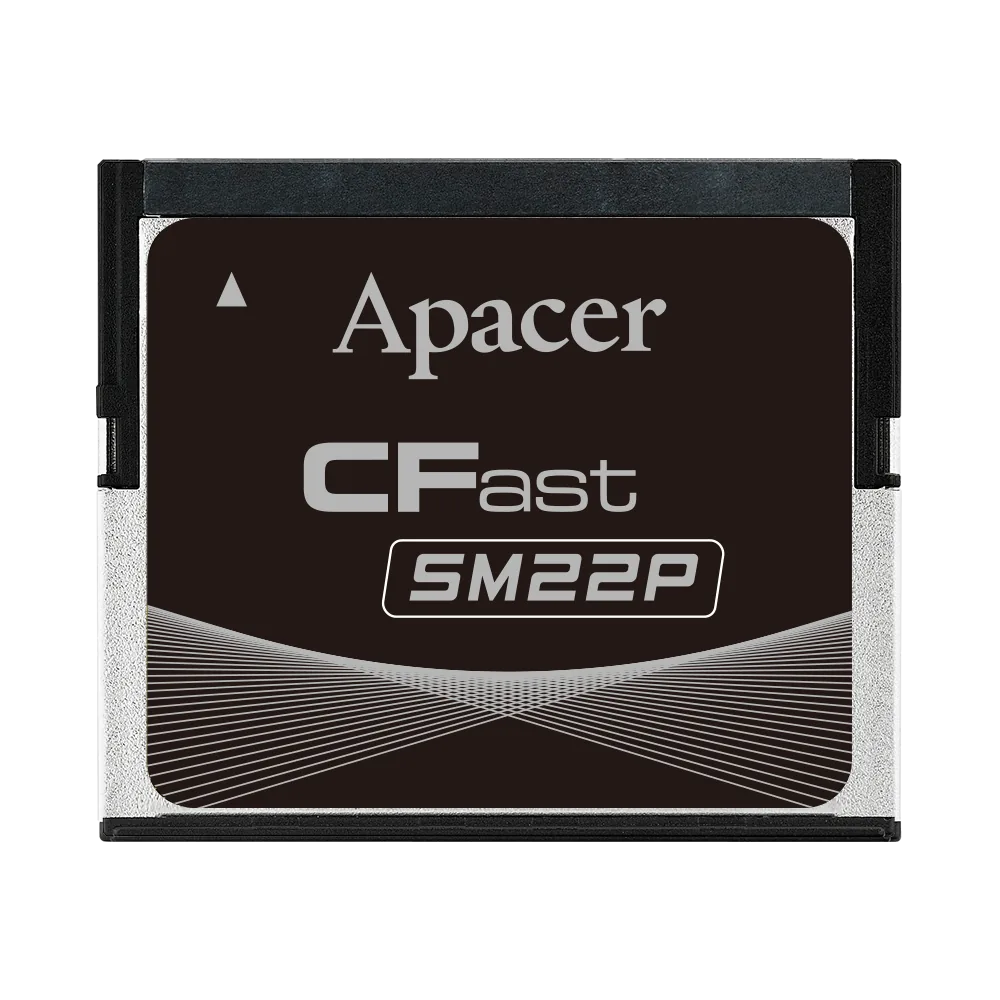
Apacer Industrial Card families cover SD, microSD, CompactFlash, CFast and CFexpress form factors. Interface revision, NAND type, capacity, S.M.A.R.T., Write Protect, Wide Temperature and other value-adding features are confirmed against the selected model.
| Card family | Interface | Mechanical role | Reliability options | Typical use |
|---|---|---|---|---|
| Industrial SD / microSD | SD 2.0/3.0/5.0/6.1 by model · UHS-I where supported | Compact removable media | SLC/MLC/SLC-liteX or 3D NAND by family · write-control options | Embedded logging, handhelds and boot media |
| CompactFlash / CFast | PATA / SATA 6 Gb/s | Established industrial card formats | Industrial NAND · S.M.A.R.T. or CorePower on selected models | Industrial PCs, instruments and legacy hosts |
| CFexpress Type B | PCIe Gen3/Gen4 x2 · NVMe | High-throughput removable storage | LDPC · E2E protection · thermal and PLP options by model | Imaging and high-rate capture |
Industrial Memory Card Capabilities
Removable data media
Use SD, microSD or CompactFlash-class media where field replacement, data transfer or service access is required.
Logging and imaging fit
Select sustained-write capability and endurance around continuous recording, camera capture and event logging workloads.
Environmental options
Choose products with documented temperature, shock and vibration ratings for the installed operating environment.
Health and data controls
Use available monitoring, write-protection and security features where the host and workflow support them.
Technical Features
Removable serviceability
Cards can be exchanged for data transfer, software updates or field replacement without removing the complete storage assembly. Connector cycle life and access control should be considered in frequently serviced systems.
Interface and performance range
SD and microSD suit compact low-power devices, CF and CFast support established industrial hosts, and CFexpress provides NVMe-class throughput. The host must support the correct protocol version and performance mode.
Endurance for continuous writes
Industrial NAND, pseudo-SLC modes and over-provisioning improve behaviour in write-intensive logging. Sustained write speed is more important than short burst speed for continuous video or sensor recording.
Health and wear monitoring
S.M.A.R.T. data and vendor utilities can expose remaining life, erase counts and error conditions on supported families. Monitoring can support planned replacement before remaining life or capacity becomes a system concern.
Environmental operation
Wide-temperature products and mechanically robust card formats support outdoor, vehicle and factory equipment. The connector and card socket must also tolerate vibration, contamination and repeated insertion.
Data protection and control
ECC, wear levelling, bad-block management and power-failure handling support data integrity. Write-protection, secure-erase and firmware-controlled data-protection functions can restrict unintended modification in controlled storage workflows.
Specifications
| Parameter | Unit | Value / Description |
|---|---|---|
| CARD FORMATS | ||
| SD / microSD | — | Industrial SD and microSD products covering SD 2.0, 3.0, 5.0 or 6.1 families by model; UHS-I support where specified. |
| CompactFlash | — | PATA-based CompactFlash cards, including CFA 6.0-class products on supported families. |
| CFast | — | SATA-based removable cards, including CFast 2.0 families with SATA 6 Gb/s interfaces. |
| CFexpress | — | CFexpress 2.0 Type B products using PCIe Gen3 or Gen4 x2 and NVMe, depending on model. |
| FLASH & RELIABILITY | ||
| Capacity | GB | Model-dependent, from low-capacity legacy media to terabyte-class CFexpress products. |
| Flash technology | — | SLC, MLC, SLC-lite/SLC-liteX and 3D TLC/eTLC technologies across supported families. |
| Monitoring / ECC | — | S.M.A.R.T., BCH or LDPC ECC, wear levelling and vendor health utilities on supported card families. |
| Operating temperature | °C | Standard, extended and wide-temperature products, including selected -40 to +85 °C models. |
| DATA PROTECTION & HOST FIT | ||
| Write / security control | — | Hardware write protect, firmware write control, secure erase, AES or related functions on selected products. |
| Power interruption | — | CorePower capacitor-backed protection or other power-failure-management functions on selected CFexpress and CFast products. |
| Host compatibility | — | Card socket, interface revision, supported capacity, BIOS or operating-system support and file-system limits must match the host. |
Applications
Data loggers
Store environmental, process and equipment data on removable media for simple collection and archiving. Endurance and file-system recovery should match the recording interval and power-down behaviour.
Cameras and imaging
Record high-resolution still images, video or machine-vision streams using SD, CFast or CFexpress. Sustained write performance and thermal stability determine whether long recordings remain interruption-free.
Medical devices
Support software distribution, service data and removable records in portable or diagnostic equipment. Controlled lifecycle and write-protection options can simplify configuration management.
Transportation
Provide wide-temperature recording for vehicle, rail and fleet systems. Mechanical retention, vibration exposure and abrupt power loss should be considered together with card endurance.
Handheld equipment
Add low-power removable storage to scanners, terminals and field instruments. microSD provides compact capacity, while industrial variants improve retention and environmental operation.
Legacy industrial hosts
Maintain systems designed around CompactFlash or CFast without replacing the complete controller. Interface mode, maximum supported capacity and card geometry must remain compatible.
Similar Products
All Apacer products →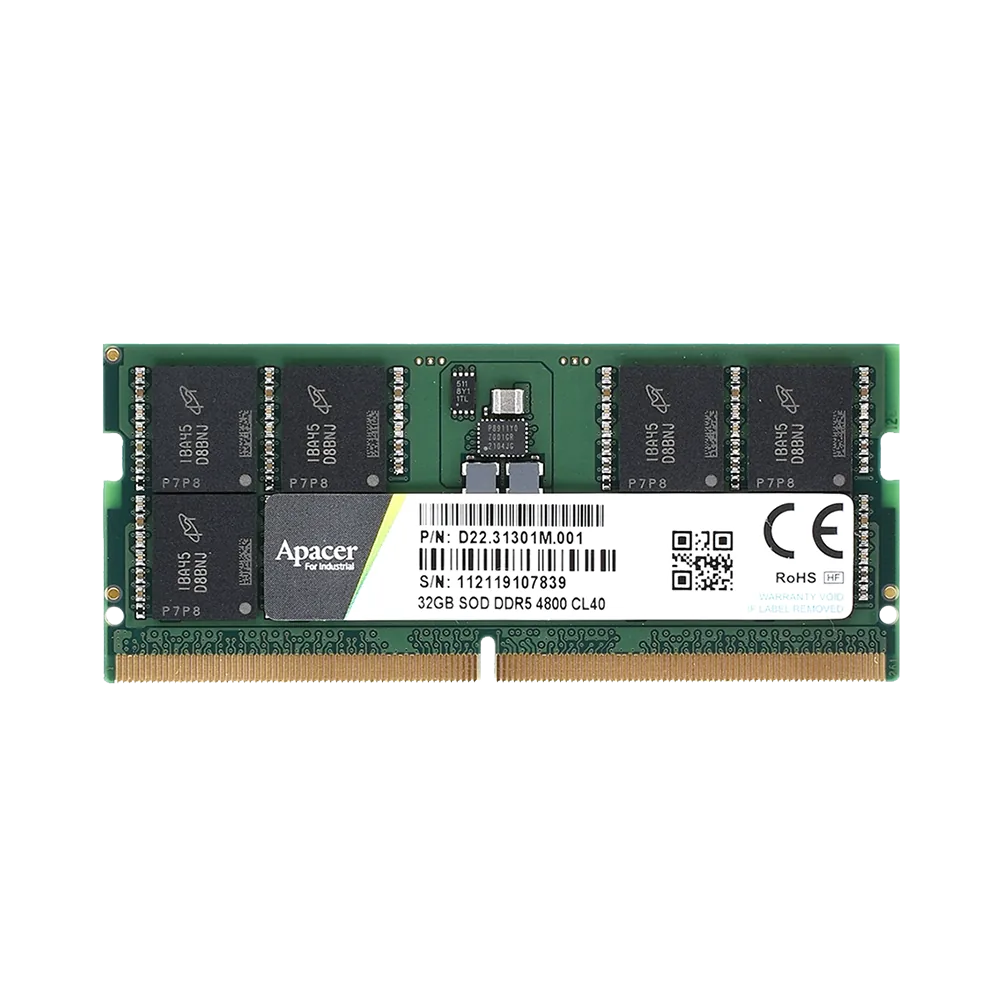
Apacer Industrial DRAM Module families across DDR5, DDR4 and legacy generations, with ECC, VLP, Wide Temperature and rugged options on supported series.

Apacer Industrial SSD families across PCIe SSD and SATA, with model-specific CorePower, DataDefender™, CoreSecurity2, Wide Temperature and ruggedization options.
Cervoz Industrial Embedded Module families in M.2, mSATA, Half Size mSATA, Half Slim, SATA Disk and PATA Disk formats.