Modular Expansion Card
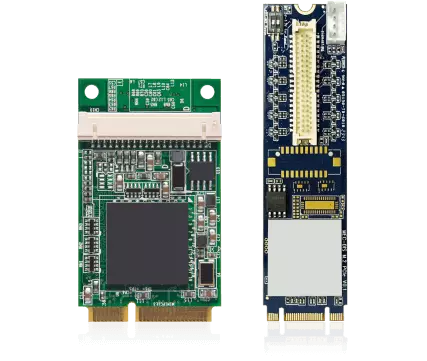
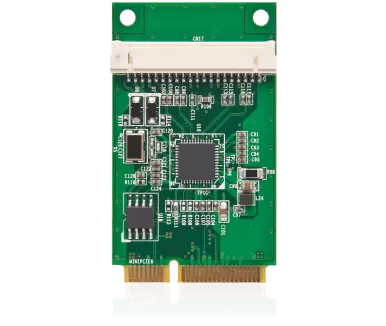
Cervoz MEC Series Modular Expansion Card add Ethernet and Wi-Fi connectivity, serial and CAN Bus communication, USB and SATA storage, and display expansion through compact M.2 and Mini PCIe form factors. Controller, port count, isolation, ESD protection, driver and Wide Temperature support are model-specific.
| Function | Host form factor | Interface / ports | Product-specific options | Use |
|---|---|---|---|---|
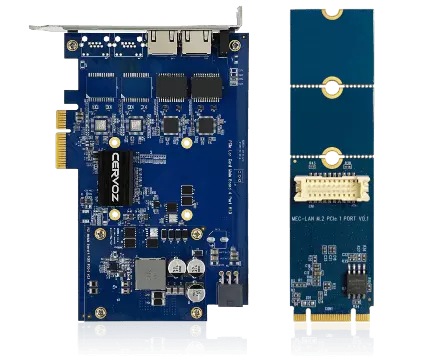
| Networking | M.2 / Mini PCIe | 1GbE or 2.5GbE · one or two ports; Wi-Fi/Bluetooth by module | Isolation on selected Ethernet cards; Wi-Fi 5/6/6E/7 by current wireless family | Additional wired or wireless connectivity |
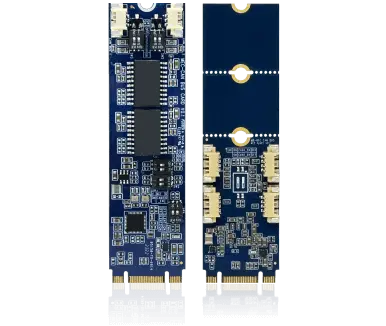
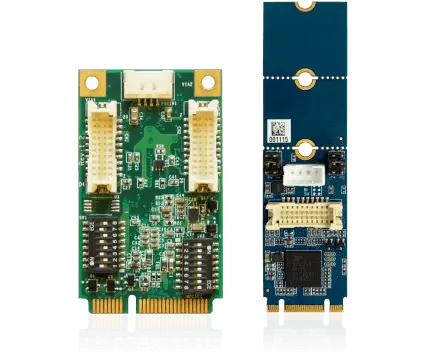
| Industrial communication | M.2 / Mini PCIe | RS-232/422/485 · CAN 2.0A/B · CAN FD | Two- or four-port models; galvanic isolation on selected products | Machine, instrumentation and vehicle interfaces |
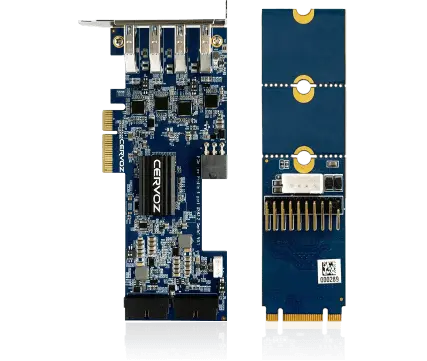
| Peripheral expansion | M.2 / Mini PCIe | USB 3.2 Gen1 · DVI/VGA · SATA III | Type-A or Type-C, cable/breakout and RAID options by model | Compact peripheral and storage extension |
Expansion Capabilities
Additional interfaces
Add Ethernet, serial, CAN, USB or other functions without changing the complete embedded-computer platform.
Use of existing expansion slots
Match mini PCIe or M.2 keying, bus type and lane availability to the host before selecting the module.
Application-specific connectivity
Configure the system around the port count, isolation, connector access and cabling required by the equipment.
Software and mechanical compatibility
Validate driver support, operating-system behaviour, retention, airflow and enclosure clearance as part of the complete installation.
Technical Features
Slot and bus compatibility
M.2 and Mini PCIe connectors may expose PCIe, USB, SATA or other signals depending on the motherboard. Card keying and physical fit alone do not guarantee electrical compatibility.
Industrial communication
Serial families provide RS-232, RS-422 or RS-485, with selected modules supporting multiple ports, rates up to 921.6 kbit/s and galvanic isolation. CAN products include CAN 2.0A/B and CAN FD variants in two- or four-port configurations.
Network expansion
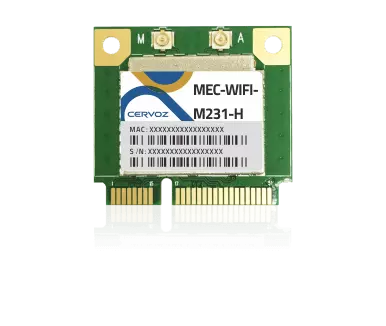
Ethernet modules include one- or two-port 1GbE and 2.5GbE designs, including isolated products. Current wireless modules cover Wi-Fi 5, 6, 6E or 7 with Bluetooth according to the selected M.2 2230 controller.
Electrical isolation
Selected Ethernet, serial and CAN modules provide galvanic isolation, including products specified up to 2.5 kV. Isolation level, channel-to-channel arrangement and connector grounding must be verified for the exact module.
Mechanical retention
Retention brackets, cable assemblies and mounting hardware help secure compact modules in vibration-prone systems. Connector accessibility and bend radius should be checked inside the final enclosure.
Driver and software support
Controller chipset, operating system and driver version must be validated together. Long-life projects should retain the approved driver package and track future operating-system changes.
Specifications
| Parameter | Unit | Value / Description |
|---|---|---|
| HOST & NETWORKING | ||
| Host form factors | — | Mini PCIe and M.2 modules, including M.2 2230 wireless and M.2 2242/2260/2280 expansion-card formats. Keying and electrical bus vary by product. |
| Ethernet | — | One- or two-port Gigabit and 2.5 Gigabit Ethernet modules; isolated variants on supported families. |
| Wireless | — | M.2 2230 Wi-Fi/Bluetooth modules covering Wi-Fi 5, 6, 6E or 7 and corresponding Bluetooth versions by controller. |
| Serial | — | RS-232, RS-422 and RS-485 modules, including two- and four-port products; up to 921.6 kbit/s on selected models. |
| PERIPHERAL & FIELD I/O | ||
| CAN | — | CAN 2.0A/B and CAN FD products in selected two- or four-port configurations; isolation available by model. |
| USB | — | USB 3.2 Gen1 host expansion with Type-A or Type-C port assemblies; one- or two-port configurations by model. |
| Display | — | Compact DVI and VGA expansion solutions on supported Mini PCIe modules. |
| Storage interface | — | Two-port SATA III expansion modules, with RAID support on selected products. |
| PROTECTION, MECHANICAL & SOFTWARE | ||
| Electrical isolation | — | Isolated Ethernet, serial or CAN products, including up to 2.5 kV isolation on applicable modules. |
| Mechanical integration | — | MECFIX or product-specific mounting, retention, cables and breakout assemblies for compact installations. |
| Operating temperature | °C | Standard and industrial-temperature variants according to controller and product family. |
| Driver support | — | Driver and operating-system support depends on controller chipset; retain the qualified driver package for long-life systems. |
Applications
Industrial gateways
Add Ethernet, Wi-Fi, serial or CAN interfaces to bridge equipment and higher-level networks. Isolation can be valuable when connecting field buses to grounded IT infrastructure.
Vehicle systems
Extend embedded computers with CAN, Ethernet, Wi-Fi or additional serial channels for diagnostics and data collection. Mechanical retention and wide-temperature operation support mobile installations.
Machine control
Provide extra serial, CAN or isolated communication ports for drives, instruments and remote I/O. The module lets one compute platform be adapted to several machine variants.
Edge computers
Add network ports, USB, display or storage interfaces to compact edge controllers. This can preserve the base system while adapting I/O to a specific camera, sensor or local-storage architecture.
Medical equipment
Expand controlled peripheral or network connectivity inside diagnostic and clinical devices. Driver control and electrical isolation should be assessed as part of the complete equipment design.
Legacy integration
Restore serial, CAN or other interfaces no longer available on modern motherboards. A modular card can extend the service life of existing machinery without replacing every connected device.
Related technologies
Cervoz technology overview →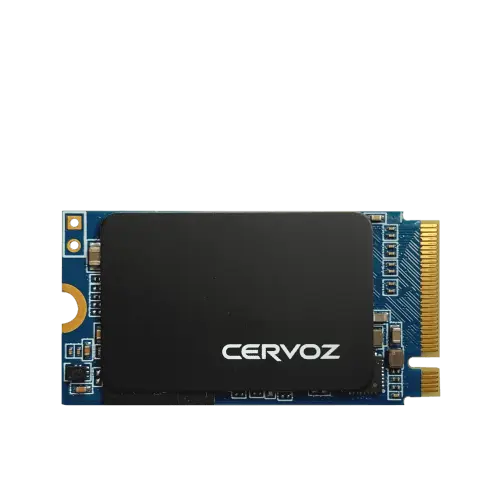
Cervoz Industrial Embedded Module families in M.2, mSATA, Half Size mSATA, Half Slim, SATA Disk and PATA Disk formats.
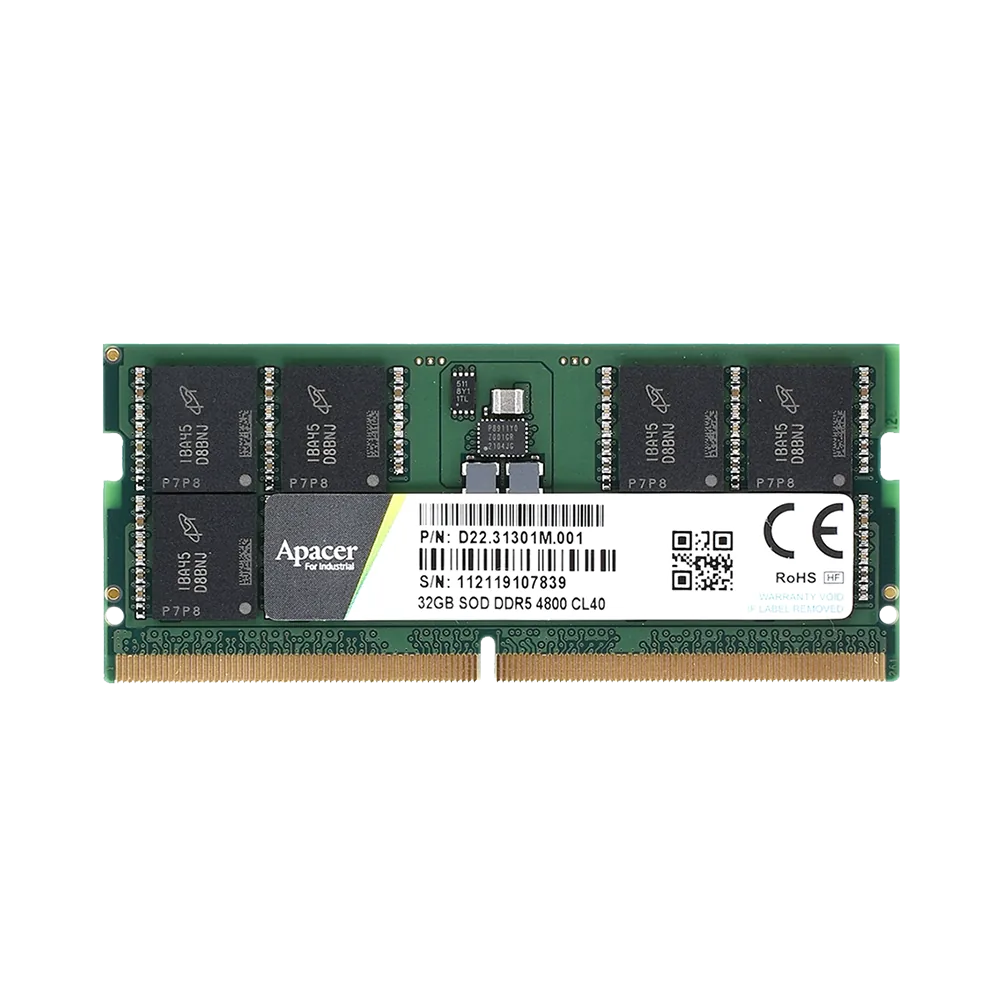
Apacer Industrial DRAM Module families across DDR5, DDR4 and legacy generations, with ECC, VLP, Wide Temperature and rugged options on supported series.
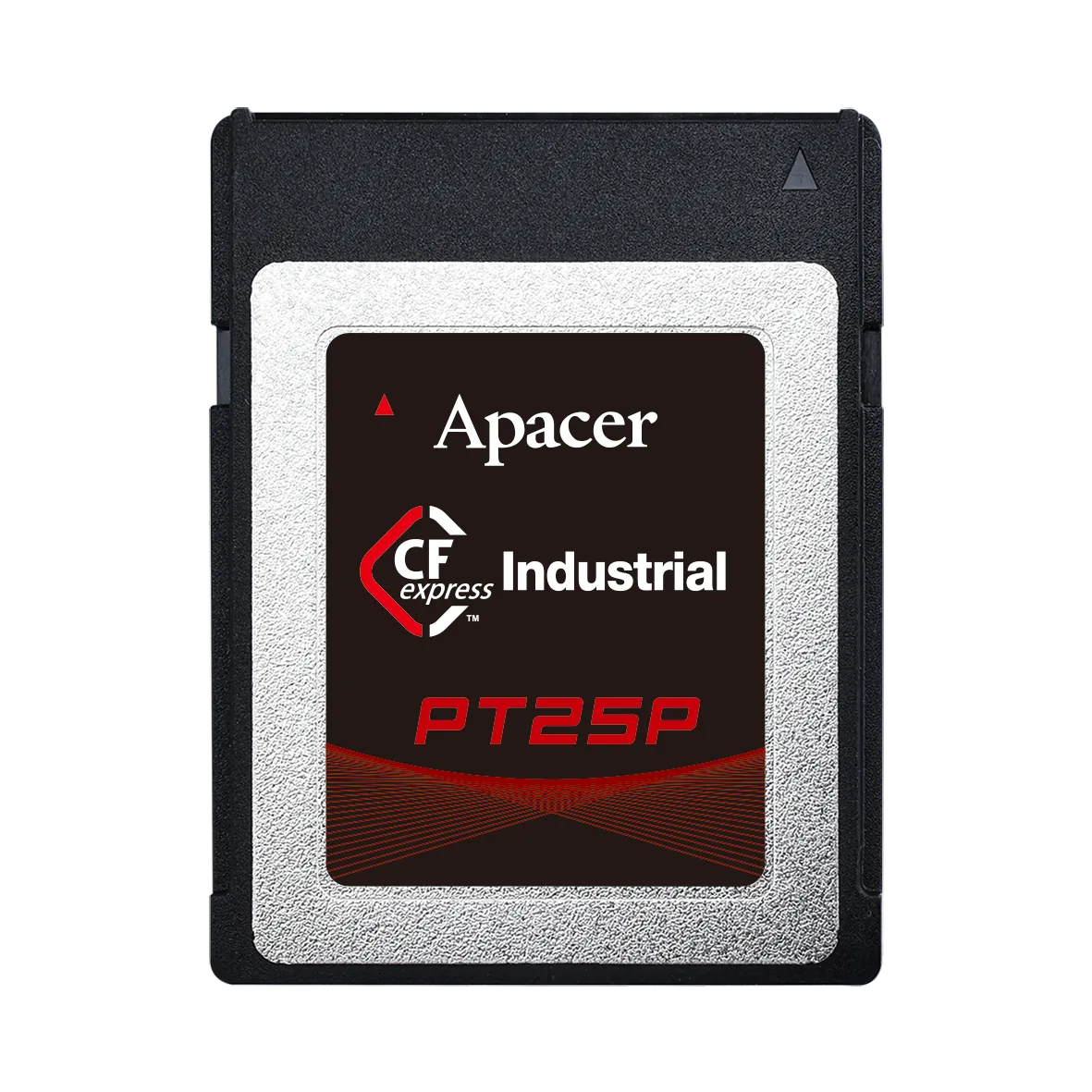
Apacer Industrial Card families across SD, microSD, CompactFlash, CFast and CFexpress, with value-adding features determined by model.