Industrial DRAM Module
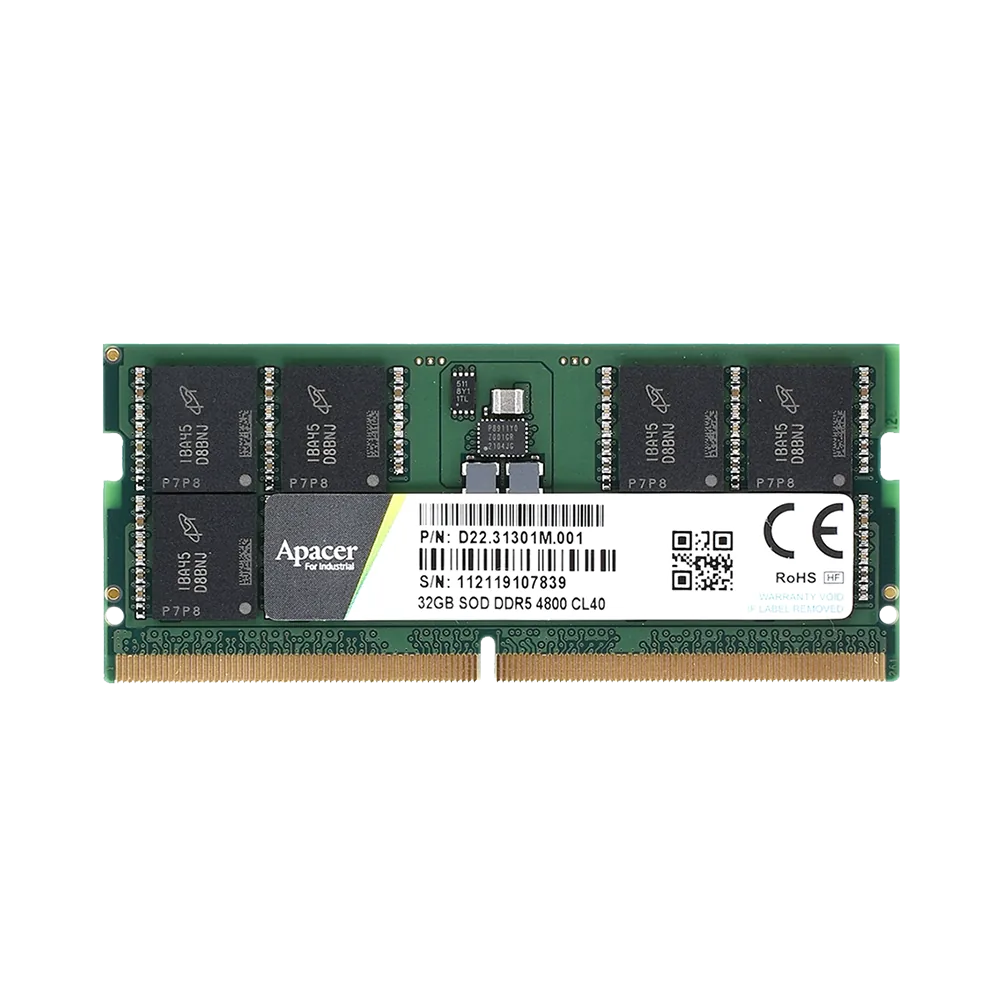
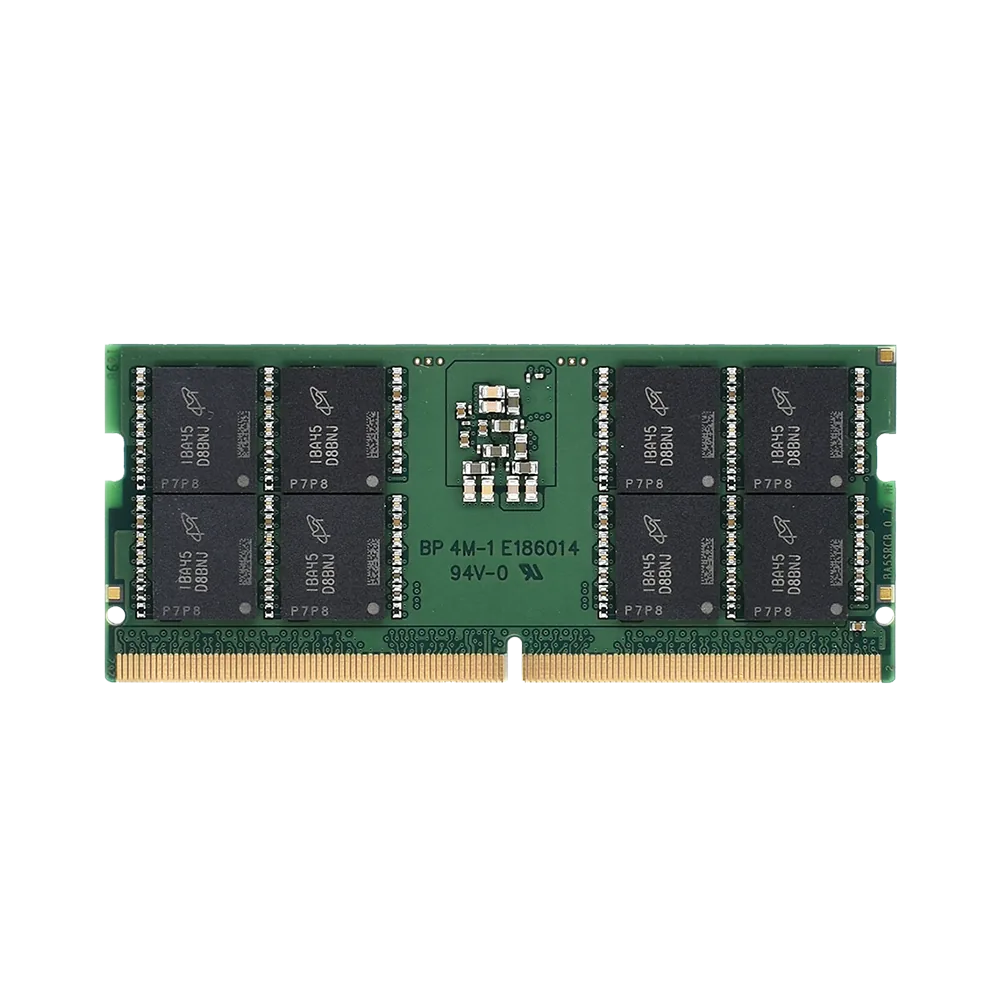
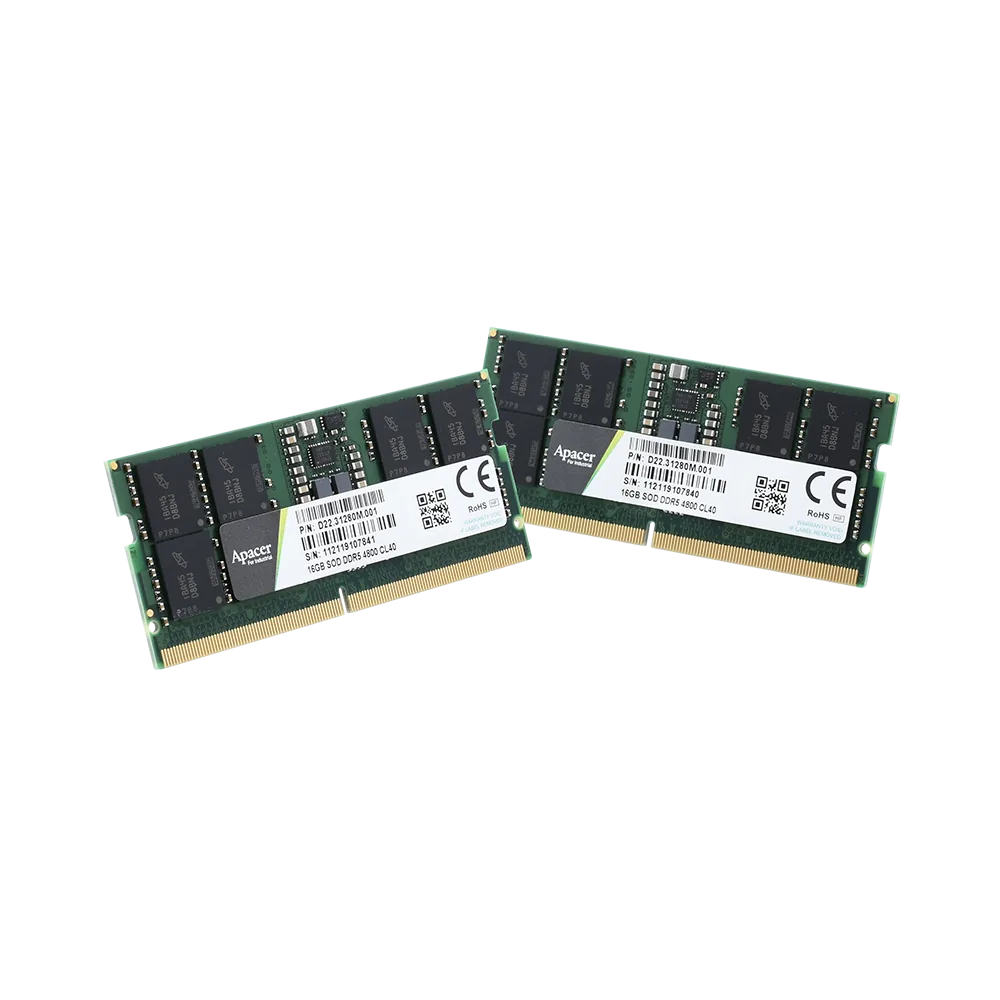
Apacer Industrial DRAM covers DDR5, DDR4 and legacy generations across Embedded Memory, Server/Workstation, Very Low Profile, Wide Temperature, Anti-Sulfuration, Fully Lead-Free, Rugged Memory and GraTherX Thermal Solution families. Module type and environmental features remain series-specific.
| Module class | Generation | Form factors | Reliability options | System fit |
|---|---|---|---|---|
| Embedded and client memory | DDR5 / DDR4 / legacy | UDIMM · SO-DIMM · CUDIMM · CSODIMM | On-die ECC in DDR5 · selected environmental options | Industrial PCs and embedded systems |
| ECC and server memory | DDR5 / DDR4 / DDR3 | ECC UDIMM · ECC SO-DIMM · RDIMM · VLP | System ECC · thermal sensor by module type | Servers, networking and high-reliability platforms |
| Rugged and legacy memory | DDR4 XR-DIMM and selected earlier DDR families | Mechanically retained or legacy DIMM / SO-DIMM | Wide temperature · coating · underfill · anti-sulfuration options | Mobile, harsh-environment and long-life equipment |
Industrial DRAM Capabilities
Platform-compatible capacity
Select the DDR generation, module type, density, rank and speed supported by the processor and motherboard.
Appropriate error handling
Choose ECC or non-ECC modules according to processor support, system architecture and application reliability requirements.
Environmental fit
Wide-temperature, VLP and mechanically retained options can be selected for compact, mobile or harsh-environment systems.
Revision and lifecycle control
Industrial sourcing and component-management options support repeat builds where unplanned memory changes would require revalidation.
Technical Features
Platform compatibility
Memory generation, voltage, rank, module type and supported density must match the processor and motherboard. BIOS training behaviour and validated module lists are especially important at high DDR5 data rates.
ECC architecture
System-level ECC requires compatible memory, processor and chipset support. DDR5 on-die ECC improves cell-level reliability but does not replace end-to-end ECC exposed to the host platform.
Temperature qualification
Wide-temperature modules support systems exposed to cold start, elevated enclosure temperature or outdoor operation. Thermal margin should be assessed at the DRAM device and module level, not only from room ambient.
Mechanical protection
VLP modules reduce airflow obstruction in compact chassis. Selected product families provide conformal coating, underfill, anti-sulfuration materials or 30 µm gold fingers, while XR-DIMM uses a secure board-to-board retention concept for vibration-prone systems.
Controlled component revision
Industrial memory projects can use fixed-BOM support and PCN/EOL processes to manage DRAM IC, PCB and SPD changes. Availability and revision commitments must be confirmed for the selected module and programme.
Legacy platform continuity
Selected DDR3, DDR2 and earlier modules support equipment that cannot be redesigned immediately. Compatibility should be confirmed against the exact chipset, slot type and maximum supported density.
Specifications
| Parameter | Unit | Value / Description |
|---|---|---|
| MEMORY PORTFOLIO | ||
| Generations | — | DDR5, DDR4, DDR3 and selected DDR2 or DDR families. |
| Embedded / client module types | — | UDIMM, SO-DIMM, CUDIMM and CSODIMM families, depending on DDR generation. |
| ECC / server module types | — | ECC UDIMM, ECC SO-DIMM, RDIMM and very-low-profile formats for compatible platforms. |
| Rugged module type | — | XR-DIMM on supported DDR4 rugged-memory families, plus product-specific environmental-protection options. |
| Speed and capacity | — | JEDEC-compliant speed grades and capacities according to generation and module family. |
| RELIABILITY & ENVIRONMENT | ||
| ECC architecture | — | System ECC on compatible processors and chipsets; DDR5 on-die ECC operates inside each DRAM device and does not replace host-visible system ECC. |
| Operating temperature | °C | Standard products and wide-temperature modules specified for -40 to +85 °C on supported families. |
| Environmental protection | — | Conformal coating, underfill, anti-sulfuration materials and 30 µm gold-finger options on selected modules. |
| Module management | — | SPD data by module type; DDR5 modules include an on-module PMIC, and selected ECC modules include thermal sensing. |
| INTEGRATION & LIFECYCLE | ||
| Compatibility | — | Processor, chipset, BIOS, slot, rank, density, speed and ECC support must be assessed together. |
| Thermal / mechanical design | — | System airflow, module temperature, insertion retention and enclosure vibration must be checked at maximum memory load. |
| Lifecycle management | — | Fixed-BOM support, PCN/EOL processes and long-term project support for qualifying industrial modules and programmes. |
Applications
Industrial computers
Provide qualified memory for fanless box PCs, panel PCs and automation controllers. Controlled module revision helps keep a validated operating-system image stable across production batches.
Edge AI systems
Supply the memory capacity and bandwidth required for local analytics, vision pipelines and containerised workloads. Platform limits and thermal loading must be checked before increasing module density.
Transportation
Support computing systems exposed to temperature cycling, vibration and long field service. Wide-temperature and mechanically protected modules reduce environmental risk.
Medical equipment
Maintain consistent memory configurations through long development and qualification cycles. Revision control is valuable when software, EMC or safety testing depends on a fixed hardware baseline.
Networking equipment
Provide reliable memory for gateways, firewalls, communication appliances and edge routers. ECC and VLP options can be useful in compact systems with continuous operation.
Legacy machinery
Extend the service life of systems built around older DDR generations. Matching the original rank, density, voltage and timing is more important than choosing the highest nominal capacity.
Similar Products
All Apacer products →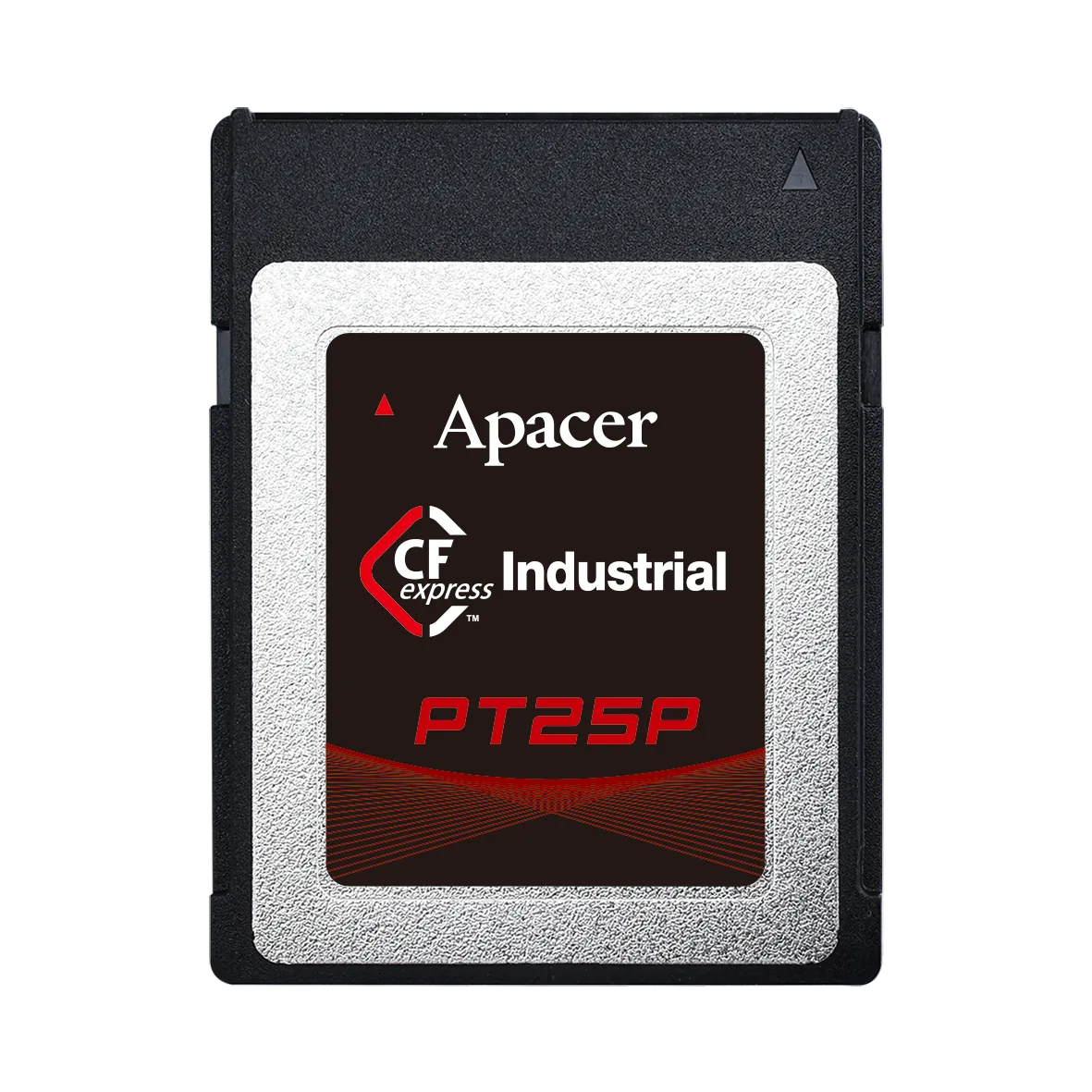
Apacer Industrial Card families across SD, microSD, CompactFlash, CFast and CFexpress, with value-adding features determined by model.

Apacer Industrial SSD families across PCIe SSD and SATA, with model-specific CorePower, DataDefender™, CoreSecurity2, Wide Temperature and ruggedization options.
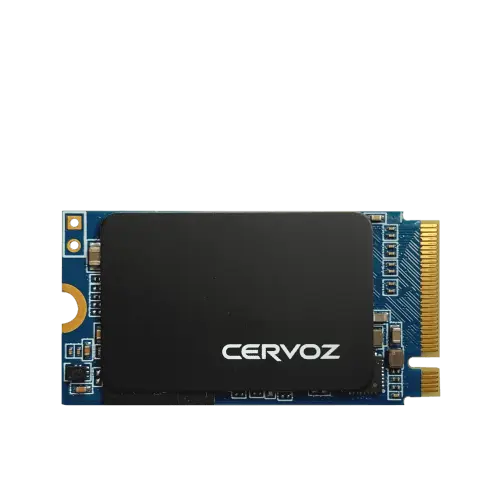
Cervoz Industrial Embedded Module families in M.2, mSATA, Half Size mSATA, Half Slim, SATA Disk and PATA Disk formats.