Verum Dezyne

A language and toolset for specifying component interfaces, modelling concurrent control behaviour, formal verification within the defined model, simulation and supported code generation.

Contract-based interfacesConcurrent componentsAutomated model checkingCounterexample traces

Design-time verification layer for interaction-heavy and concurrent control software.

Verification applies to the model and supported properties under stated assumptions; the deployed system still requires integration, code, hardware and system validation.
VerumFormal verification

Core capabilities

Core engineering capabilities

Exact capabilities depend on the selected edition, release and deployment environment.

Interface models

Specify legal interactions and obligations between provided and required interfaces.

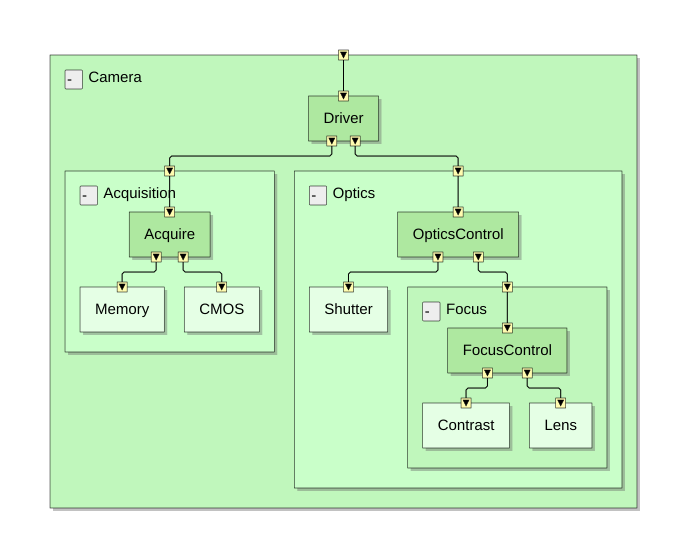
Component composition

Model behaviour and coordination across concurrent software components.

Formal verification

Automatically check supported interface and component properties across the explored state space of the defined model.

Counterexamples

Return diagnostic event traces when a property or contract cannot be satisfied.

Simulation and views

Explore model behaviour and generate architectural views for engineering communication.

Supported code generation

Generate implementation code for supported languages and workflows, followed by project integration and testing.

Implementation workflow

From evaluation to deployment

Validate the technology in the real build, target and reporting environment before wider rollout.
  1. 01Identify behavioural boundary
  2. 02Specify interfaces
  3. 03Model components
  4. 04Verify compositions
  5. 05Resolve counterexamples
  6. 06Generate and integrate

Confirm the deployment fit

Compatibility depends on the actual toolchain, target environment, integration needs and assurance objectives.
  • Interaction and concurrency risk
  • Model boundary and environment assumptions
  • Generated versus handwritten implementation split
  • Runtime framework and language fit
  • Verification and review workflow
  • Training and model governance

Where the technology adds value

Well suited for

  • Control software with complex component interactions
  • Systems vulnerable to sequencing and concurrency defects
  • Architectures needing explicit interface contracts
  • Teams shifting behavioural verification earlier

Important considerations

  • Verification does not cover hardware or physical behaviour that is outside the model.
  • Generated software still requires integration, target and system validation.
  • Model quality depends on complete and accurate behavioural requirements.
  • Numerically intensive algorithms may require complementary modelling and analysis methods.

Related capabilities

Extend the software assurance workflow

Explore adjacent capabilities across requirements, verification, testing and embedded security.