Formally check concurrent software behaviour before integration.

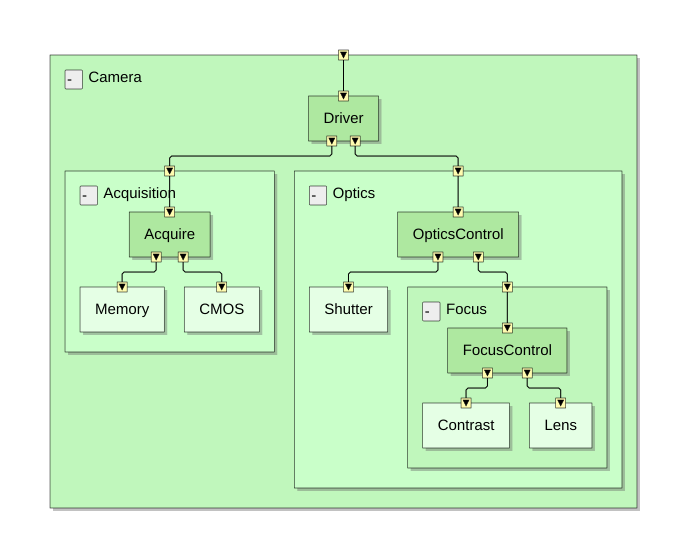
Model component interfaces and coordination logic, explore behaviour, check defined properties across the model state space and generate supported implementation artefacts.

Interface contractsComponent behaviourState-space verificationCounterexample analysis

Technical scope

Check defined control behaviour before software integration.

Model-based verification can expose sequencing, concurrency and interaction defects earlier. Results apply to the model, properties and assumptions that are explicitly verified.

Interface contracts

Define allowed event sequences and obligations between software components.

Component modelling

Express concurrent control behaviour and composition explicitly.

Automated verification

Check supported interface and component properties across the model state space.

Counterexample traces

Inspect failing scenarios that reveal deadlocks, illegal interactions or violated contracts.

Simulation and visualization

Explore behaviour and communicate architecture before implementation is fixed.

Code generation

Generate supported implementation artefacts from verified models while retaining project-specific integration responsibility.

Implementation workflow

A practical implementation sequence

The implementation should be aligned with the existing engineering process, toolchain and ownership model.
  1. 01Model interfaces
  2. 02Compose components
  3. 03Run verification
  4. 04Inspect counterexamples
  5. 05Refine behaviour
  6. 06Generate and integrate

Available capabilities

Platforms and specialist tools

Each capability addresses a defined part of the engineering lifecycle.

Technology

Verum Dezyne

A language and toolset for modelling and formally verifying concurrent control software.
Technical page

Evaluation criteria

Requirements to confirm before evaluation

Base the evaluation on the real application, interfaces, target environment and assurance requirements.
  • Control-dominant versus algorithm-dominant software
  • Concurrency and interaction complexity
  • Boundary between modelled and handwritten code
  • Target language and runtime integration
  • Verification properties and environment assumptions
  • Team adoption, model ownership and lifecycle governance

Relevant engineering frameworks

IEC 61508 workflowsISO 26262 workflowsIEC 62304 workflowsRail and industrial control development

Technical evaluation and deployment support.

Primionics supports requirements definition, evaluation planning, configuration and integration with the existing development environment.

Assess

Map the current toolchain, lifecycle constraints, evidence gaps and deployment scope.

Architect

Define platform scope, integrations, data ownership, pilot criteria and technical risks.

Enable

Support evaluation, installation, configuration, workflow integration and user adoption.

Sustain

Establish governance, review cadence, upgrades, support escalation and expansion logic.